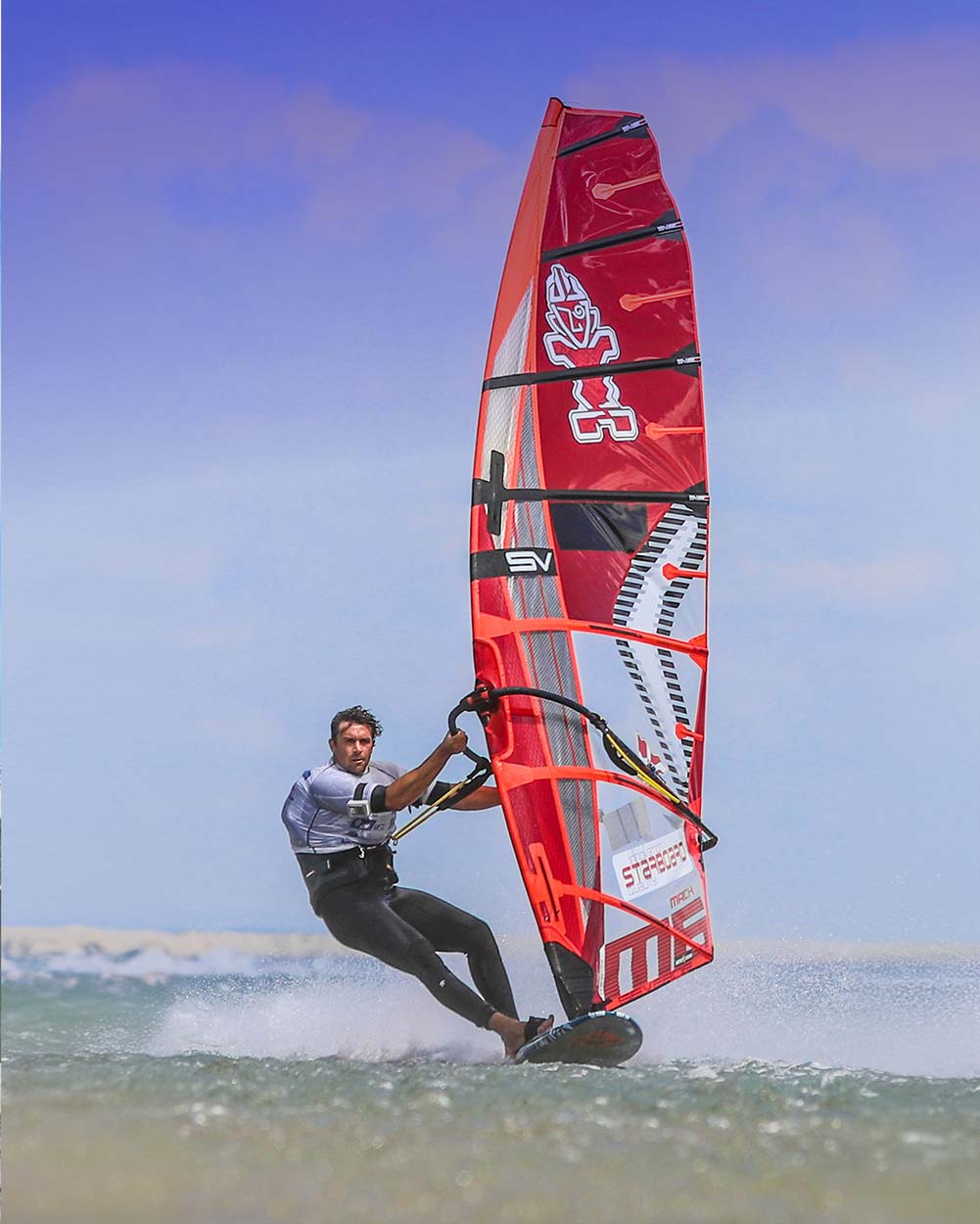
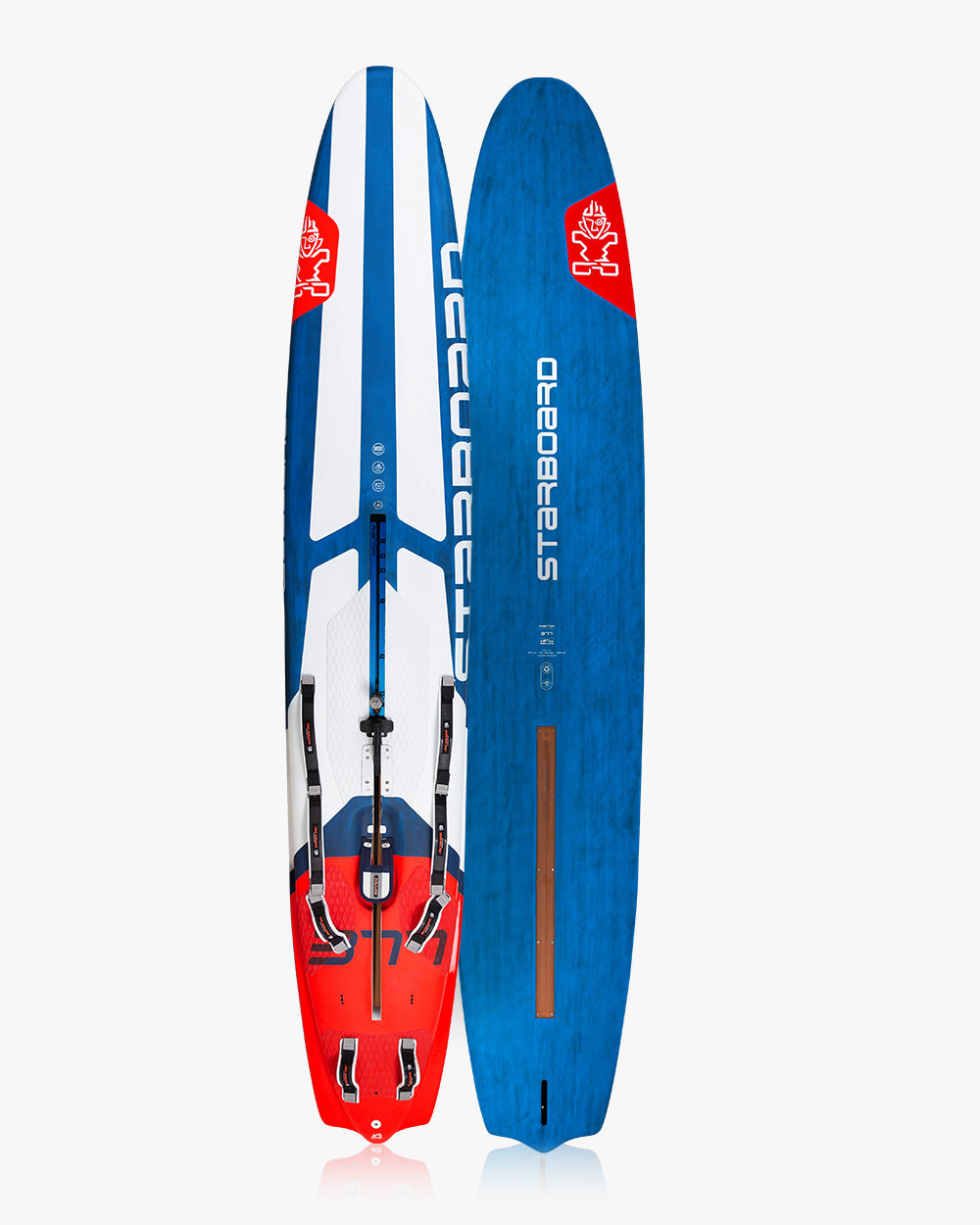
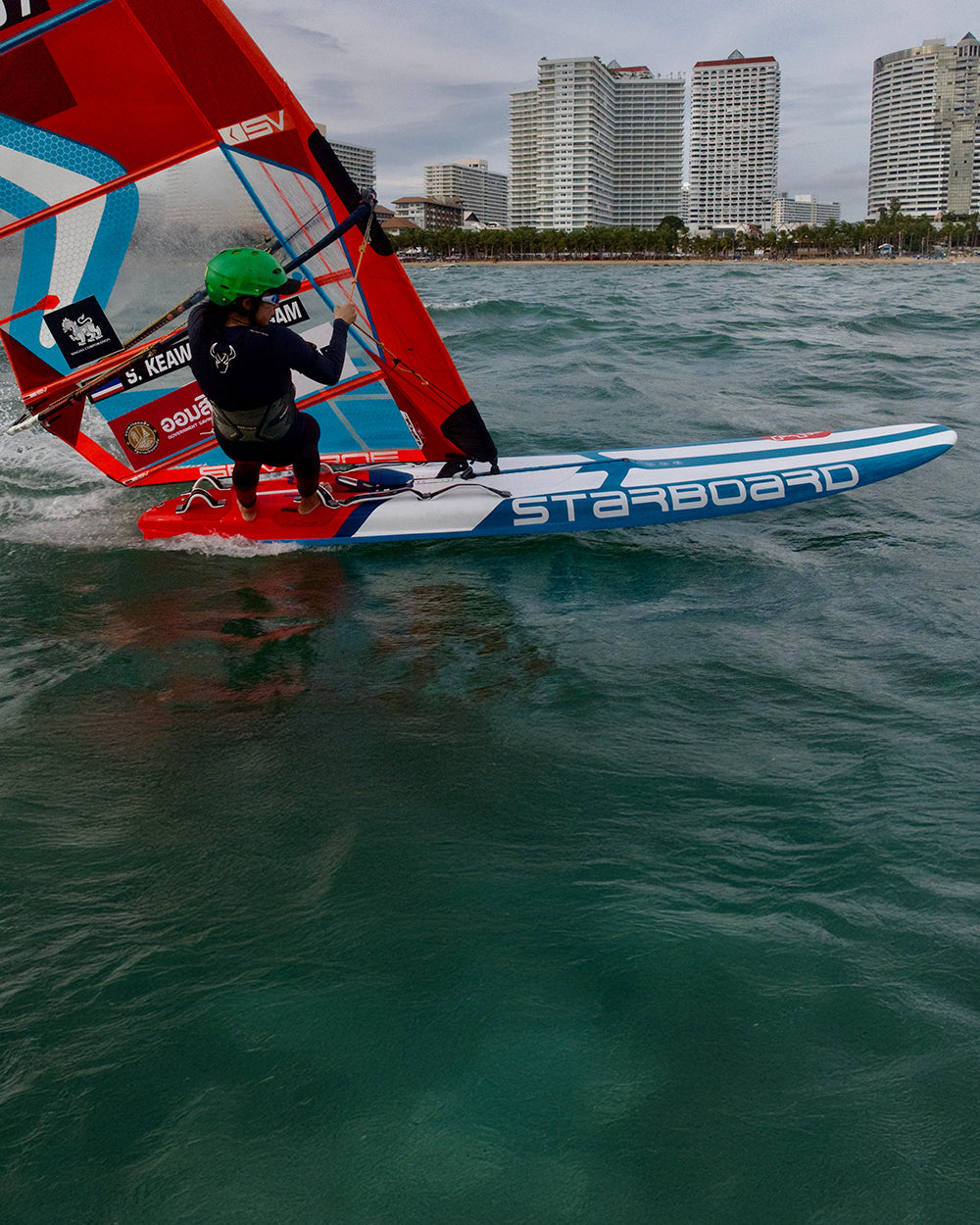
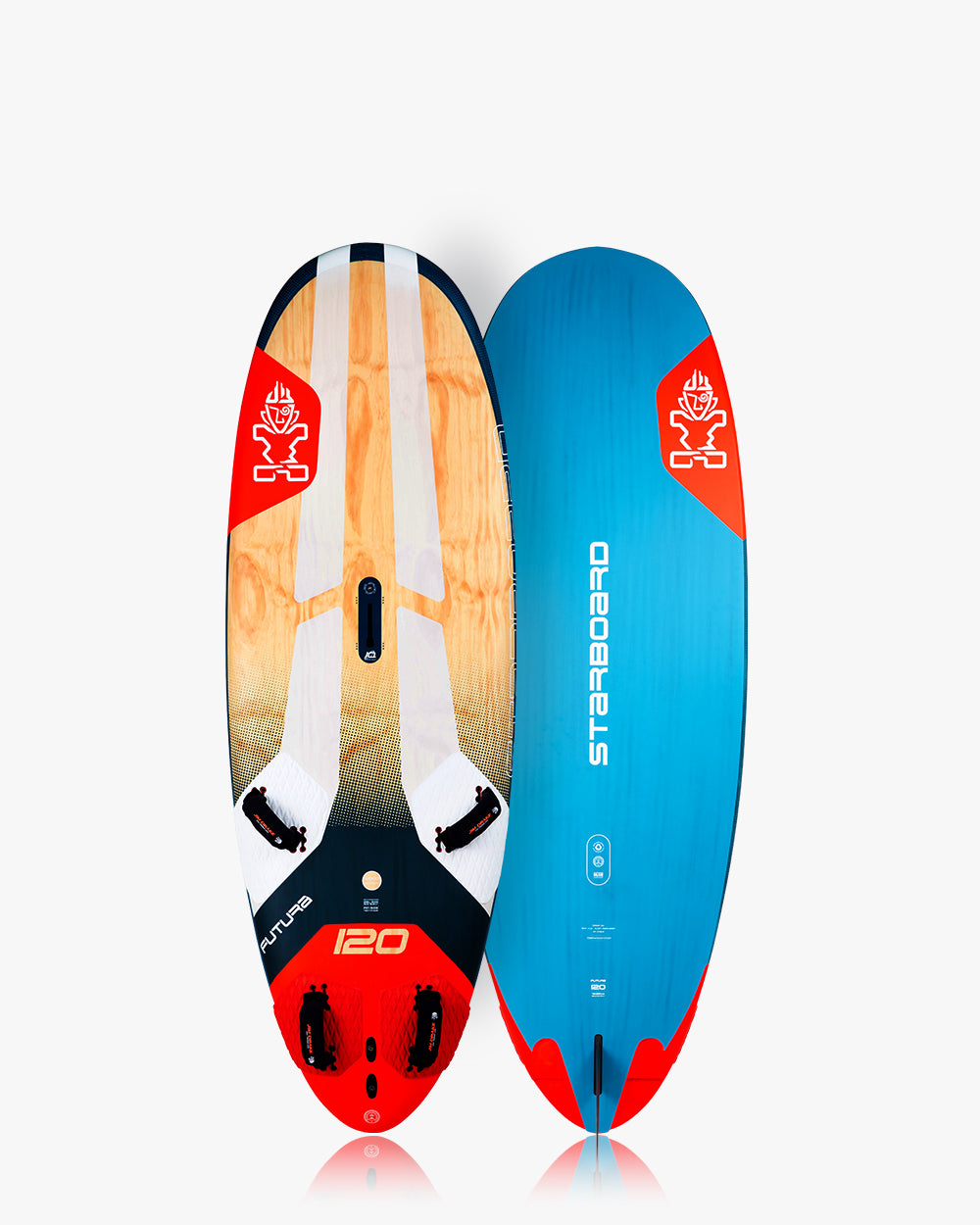
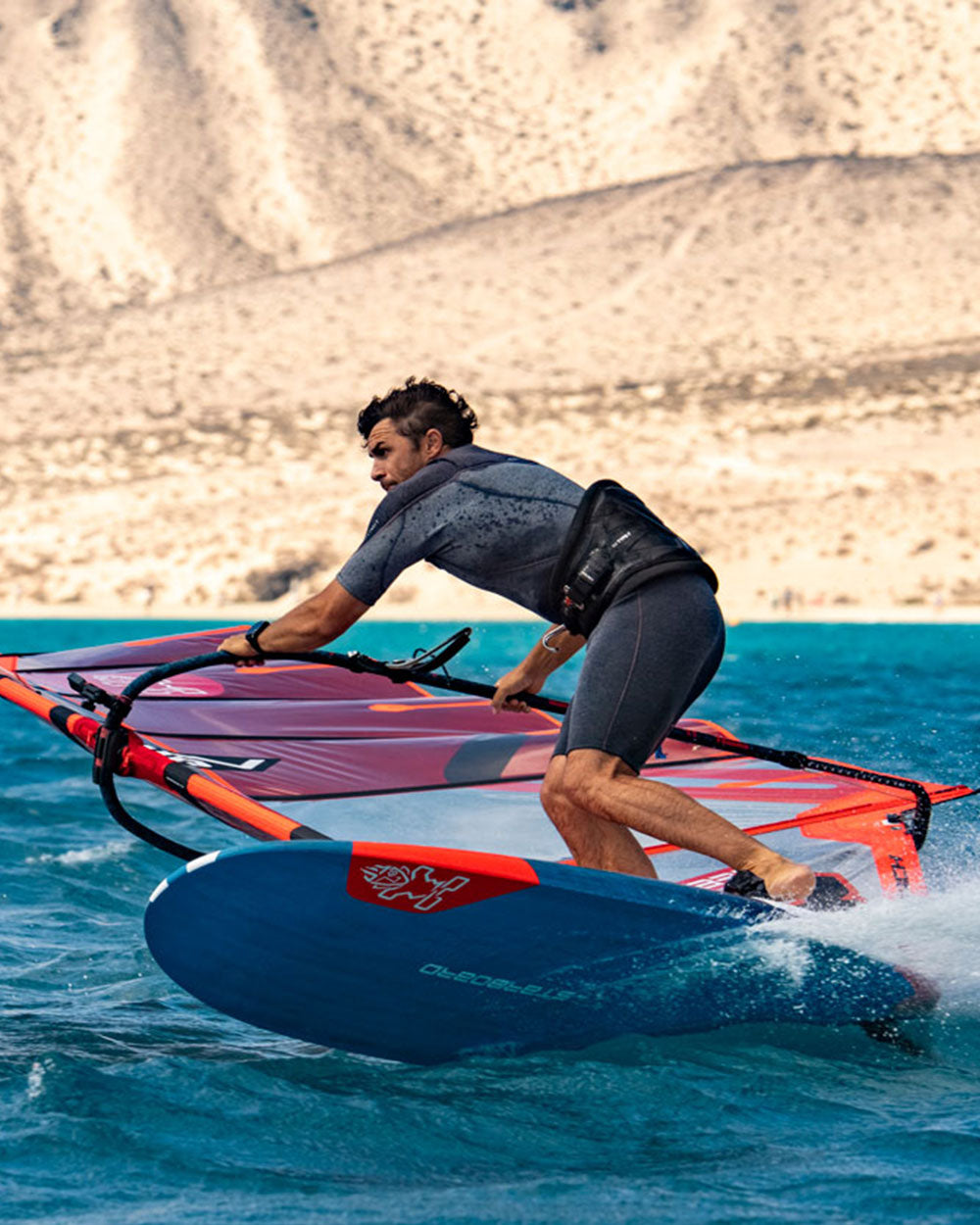
The Maximum Efficiency concept is the key. Massive wind range, massive user range, maximum top end speed, maximum average speed, unbeatable overtaking ability and the quickest acceleration out of jibes: these are the criteria to achieve maximum efficiency. How to achieve it?
The largest R&D team with a wide variety of body weights: the iSonics 2010 were developed by Tiesda You, Svein Rasmussen, Remi Vila, Sven Akerboom, Kevin Pritchard, Cyril Moussilmani, Jimmy Diaz and Jim Drake. From 60kg to 95kg, from PWA Champions to your average freerider, no iSonic prototypes are validated unless all eight designers approve.They need to be the best for the best, and the best for the rest.
The technical advantage: with Tiesda and Jim's engineering background that covers various aspects of mechanics, fluid dynamics and material science, Starboard can blend theoretical knowledge with feedback from on-the-water testing that gives a blend that no other brand can match. The famous low-nose concept, the wide-tail design, the high-aspect ratio planing surfaces and the extra thin shapes have all come from theoretical analysis. Today, these have become benchmark features in modern slalom design.
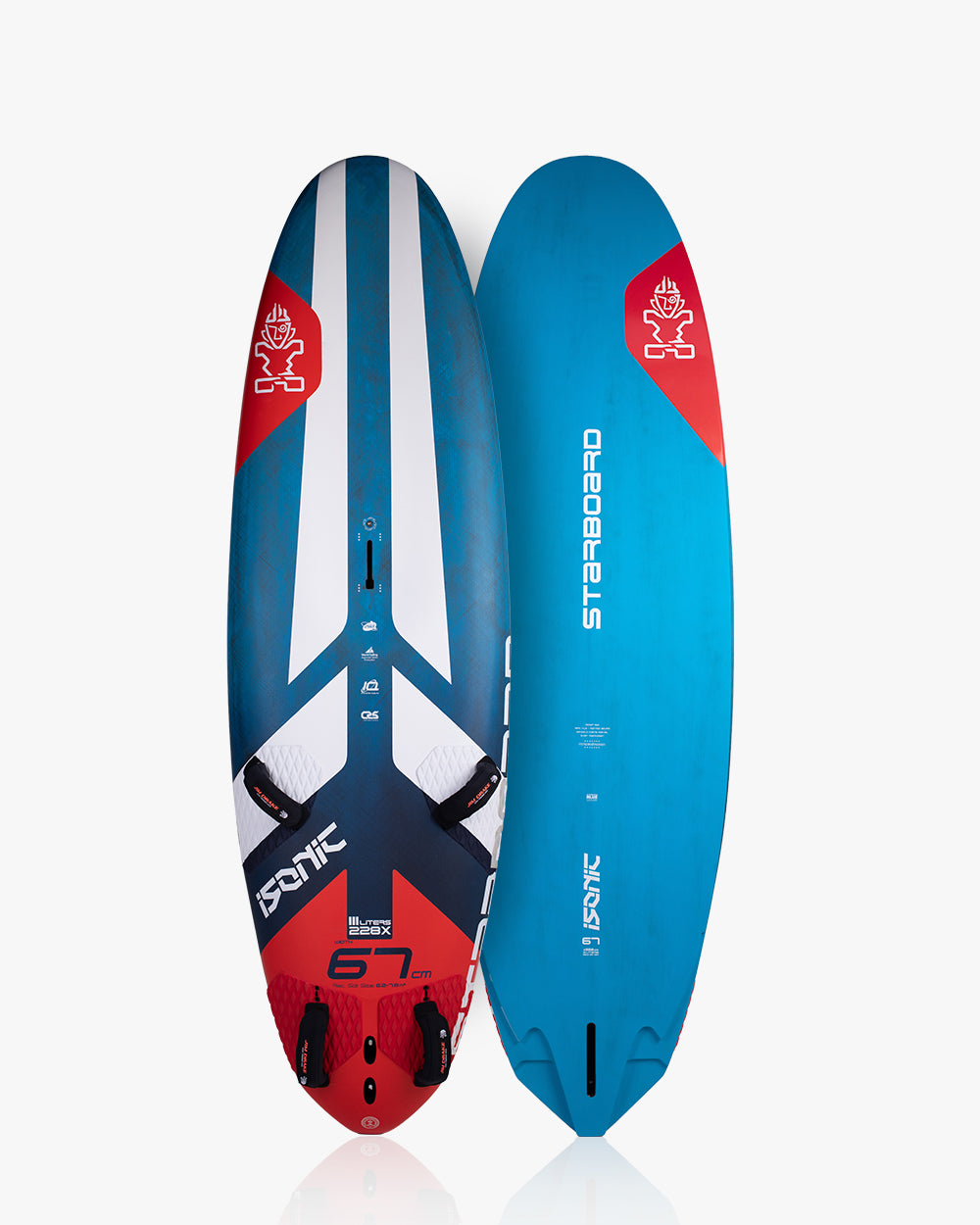
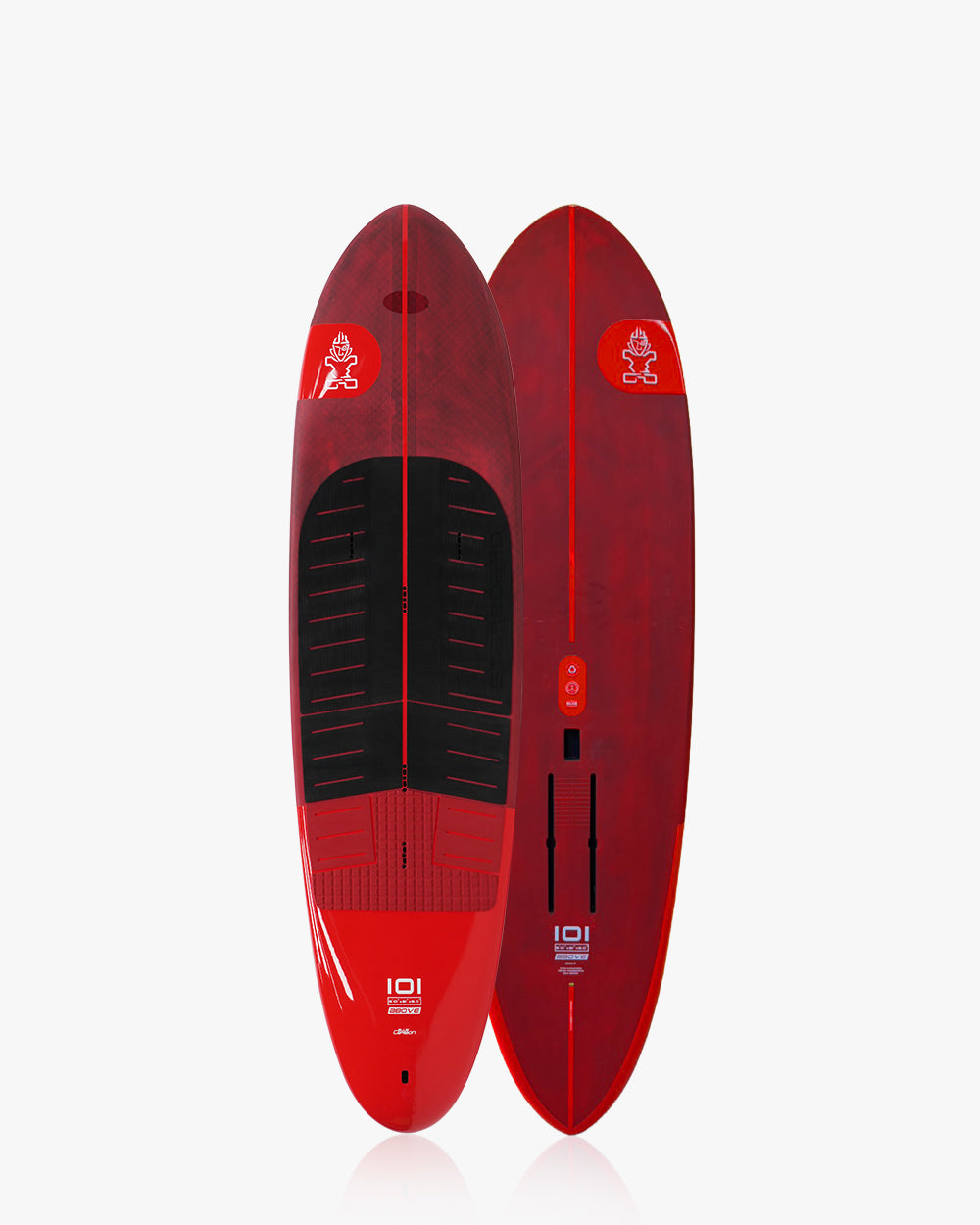
Rails with a harder release edge in the back half of the board for the iSonic 101, 111, 121 and 131: for a cleaner water release as the board accelerates on to the plane, accelerates out of a jibe or accelerates to top speed in a gust, and for a wider wetted surface area, therefore increasing the aspect-ratio of the planing surface which adds to the board's efficiency. More lift + less drag = more speed. The net result: quicker acceleration, a faster top end speed and a higher average speed.
New cutaway shapes for the iSonic 101, 111, 121 and 131: 9 variations of the cut-away shapes were tested to find a new design that increases the efficiency of the planing surface further. The new shape reduces the wetted surface while maintaining the width of the tail, therefore reducing drag without loss of lift, leverage or stability. The result: a higher top end speed.
The double winger concept, the deep deck concave, the side cuts in the tail, the low-nose concept and the wide-tail designs remain for 2010.
The iSonic 94 is an all new shape designed as a smaller version of the 101. Slightly more 'compact and wide-style' for a slalom board, the board's wind range and efficiency ratio is now much higher, giving the top end and high wind performance greater than that of the outgoing 94 yet with more bottom end and larger sail carrying capability.
The iSonic 86 Slim is an all new shape identical to the iSonic 86 but with a thinner profile. 5 litres smaller, it offers much more control and comfort in high winds and rough conditions, especially for lighter riders. With the same bottom hull shape as the 86, the slim offers the same top speed, acceleration and bottom end. A new and unique concept and a great choice for those who don't need the extra 5 litres.
For 2010, the iSonics are delivered without fins. Deboichet SL4, R13 and R16 fins are the fins the R&D team has used for testing the boards and the fins the racing team is using on tour. These are obviously the ones most recommended. Each board will have the recommended fins printed on the tail, together with the ideal sail sizes. WARNING: the iSonics have a massive wind range, therefore a quiver of two to three fins is highly recommended to take full advantage of the board's performance.
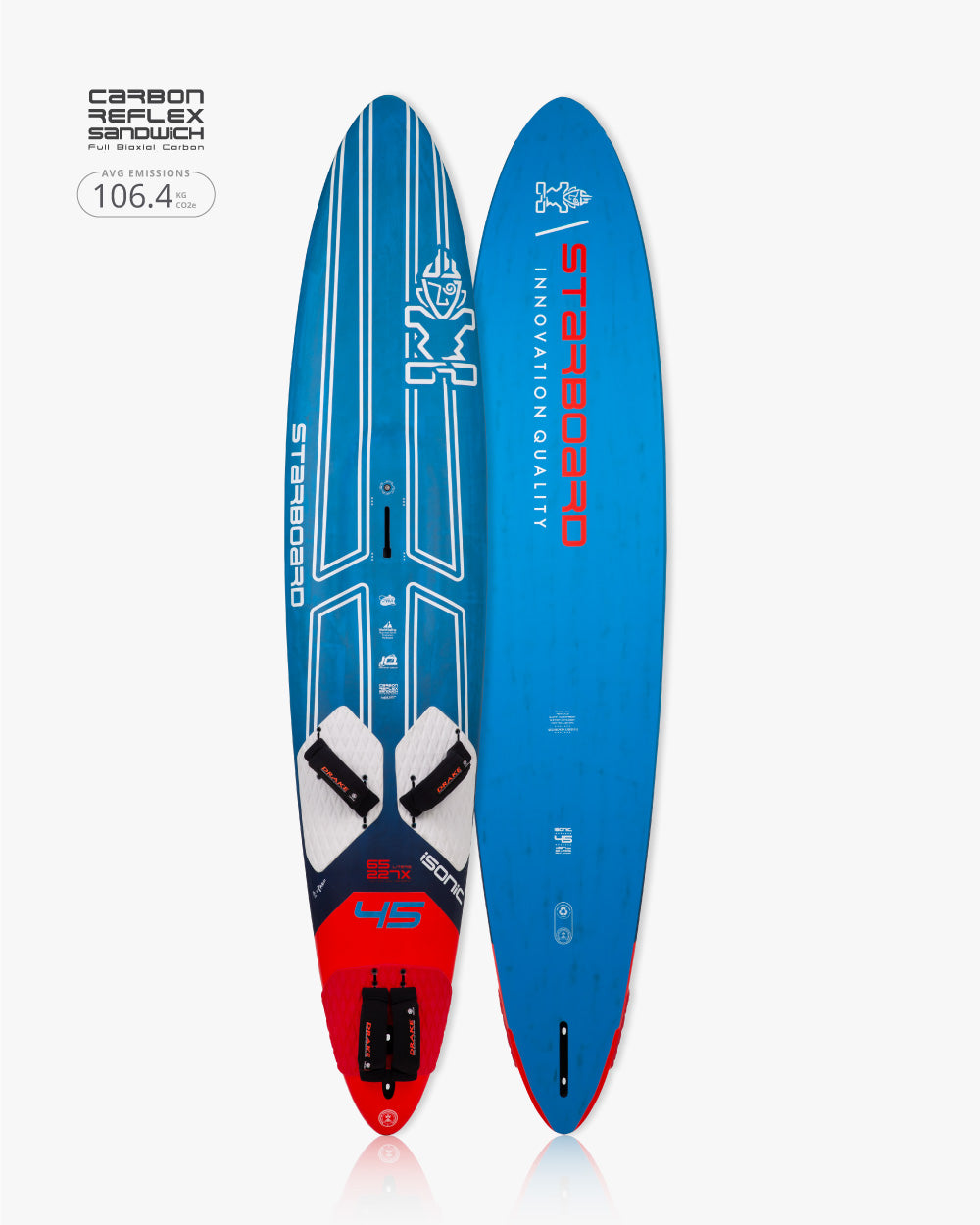
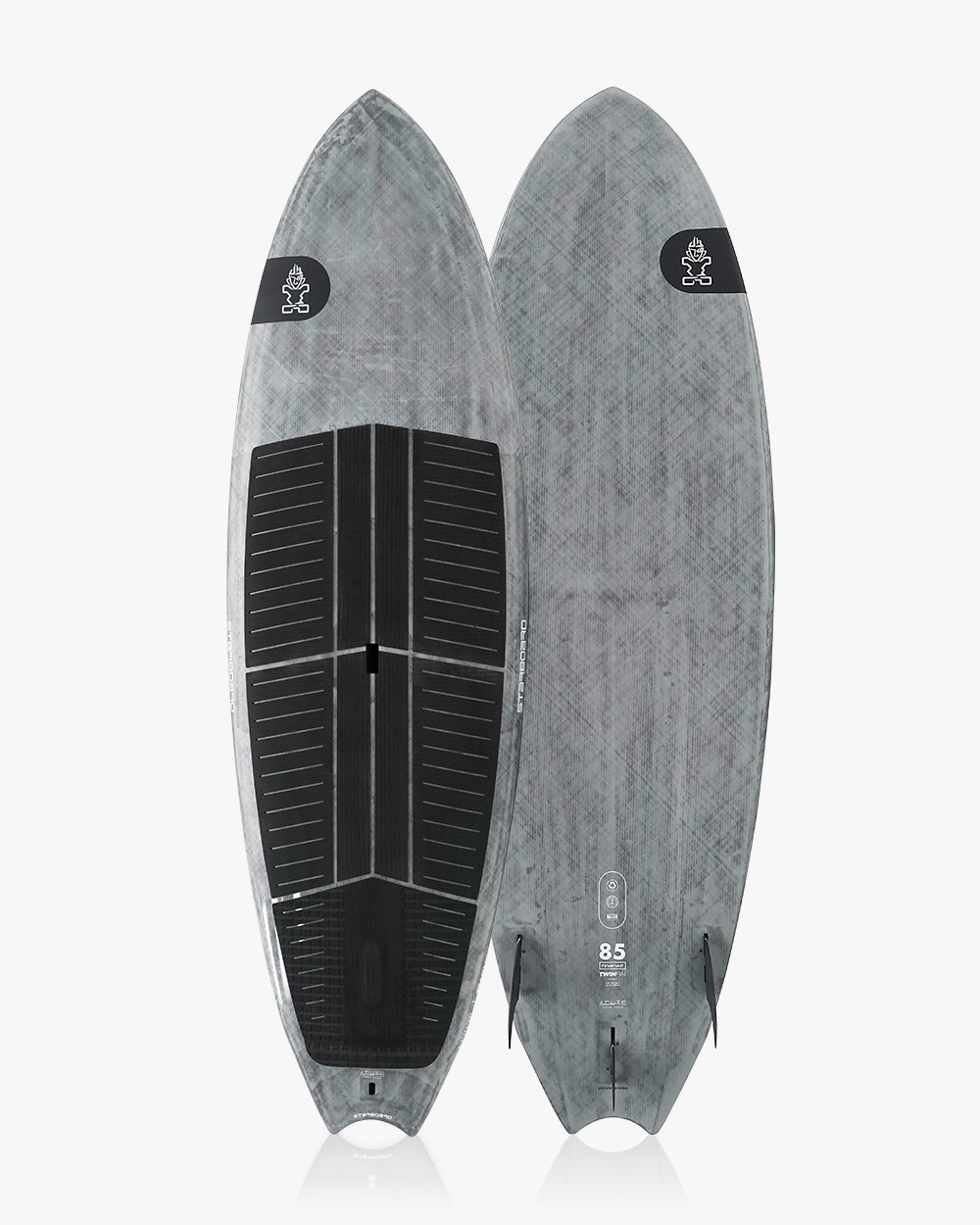
Wood offers the best control, the highest level of dynamic shape stability and increased comfort at a very light weight. The unidirectional Australian pine wood sheet of 0.6mm thickness wraps the entire board, deck and bottom, to form a stiff and rigid shell that is also tough and impact resistant.
WoodCarbon offers the lightest weight of all with a stiffer construction that offers quicker acceleration in lighter winds. Unidirectional, ultra light and flat woven carbon is used for maximum stiffness and minimum weight.
The iSonic WoodCarbons are only available for the larger sizes. This construction itself is staggered into two groups: the iSonic 94, 101, 111 WoodCarbons are built with a carbon deck and a wood bottom to achieve a blend between stiffness and control, as these boards are used mainly in medium wind strengths. The iSonic 121, 131 and 144 WoodCarbons are built in carbon both deck and bottom, as these boards are mainly used in lighter winds. All WoodCarbon boards feature a wood spine on the deck to add structural rigidity and shock-absorbing and vibration-damping effect.
Get 10% discount of a new Deboichet fin!
Take a copy of the invoice received when you purchased your board and a photo of the boards serial number and go to:
http://www.deboichetcustom.com/ to order your fin


| Model | Volume (litres) |
Length (cm.) |
Width (cm.) |
Tail Width (cm.) |
Weight Wood (kg.) |
Weight WoodCarbon (kg.) |
Sail range (Msq) |
Recommended Drake Fin | Fin range (cm.) |
Fin box |
| iSonic 86 Slim | 81 | 243.0 | 56.5 | 37.2 | 6.0 | - | 4.5-6.5 | Drake Slalom Pro 320 | 24-36 | Tuttle |
| iSonic 86 | 86 | 243.0 | 56.5 | 37.3 | 5.98 | - | 5.0-7.0 | Drake Slalom Pro 340 | 26-38 | Tuttle |
| iSonic 94 | 94 | 236.0 | 60.0 | 42.3 | 6.07 | 5.77 | 5.2-7.8 | Drake Slalom Pro 340 | 28-40 | Tuttle |
| iSonic 101 | 101 | 234.0 | 63.5 | 45.3 | 6.43 | 6.08 | 5.5-8.5 | Drake Slalom Pro 380 | 30-44 | Tuttle |
| iSonic 111 | 111 | 235.0 | 68.5 | 49.9 | 6.80 | 6.43 | 5.8-9.0 | Drake Slalom Pro 400 | 32-48 | Tuttle |
| iSonic 121 | 121 | 231.5 | 75.0 | 52.6 | 7.15 | 6.56 | 6.0-9.5 | Drake Slalom Pro 440 | 34-50 | Deep Tuttle |
| iSonic 131 | 131 | 222.5 | 85.0 | 57.2 | 7.54 | 6.92 | 6.5-10.5 | Drake Slalom R13 Race NR 520 | 48-64 | Deep Tuttle |
| iSonic 144 | 144 | 225.0 | 85.0 | 57.2 | 7.79 | 7.14 | 7.0-11.0 | Drake Slalom R13 Race NR 520 | 40-56 | Deep Tuttle |
| iSonic 150 | 150 | 227.5 | 93.5 | 65.1 | 8.61 | - | 7.5-11.5 | Drake Slalom R13 Race NR 560 | 52-62 | Deep Tuttle |
Wood weights +-5%. Weights are estimates, final weights are not available at time of print and will be updated on to the website. Sail ranges and fin are recommended indications. |
||||||||||