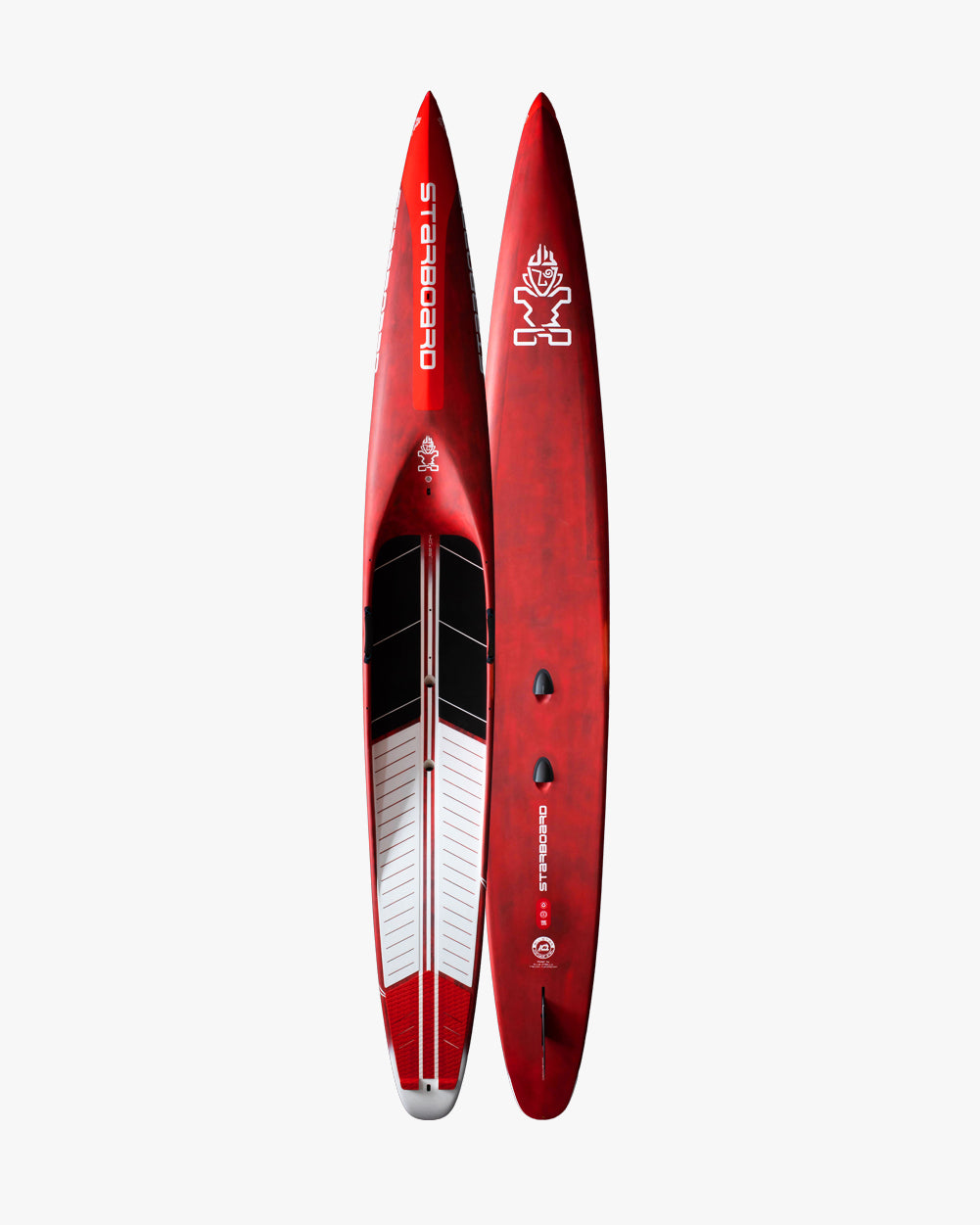
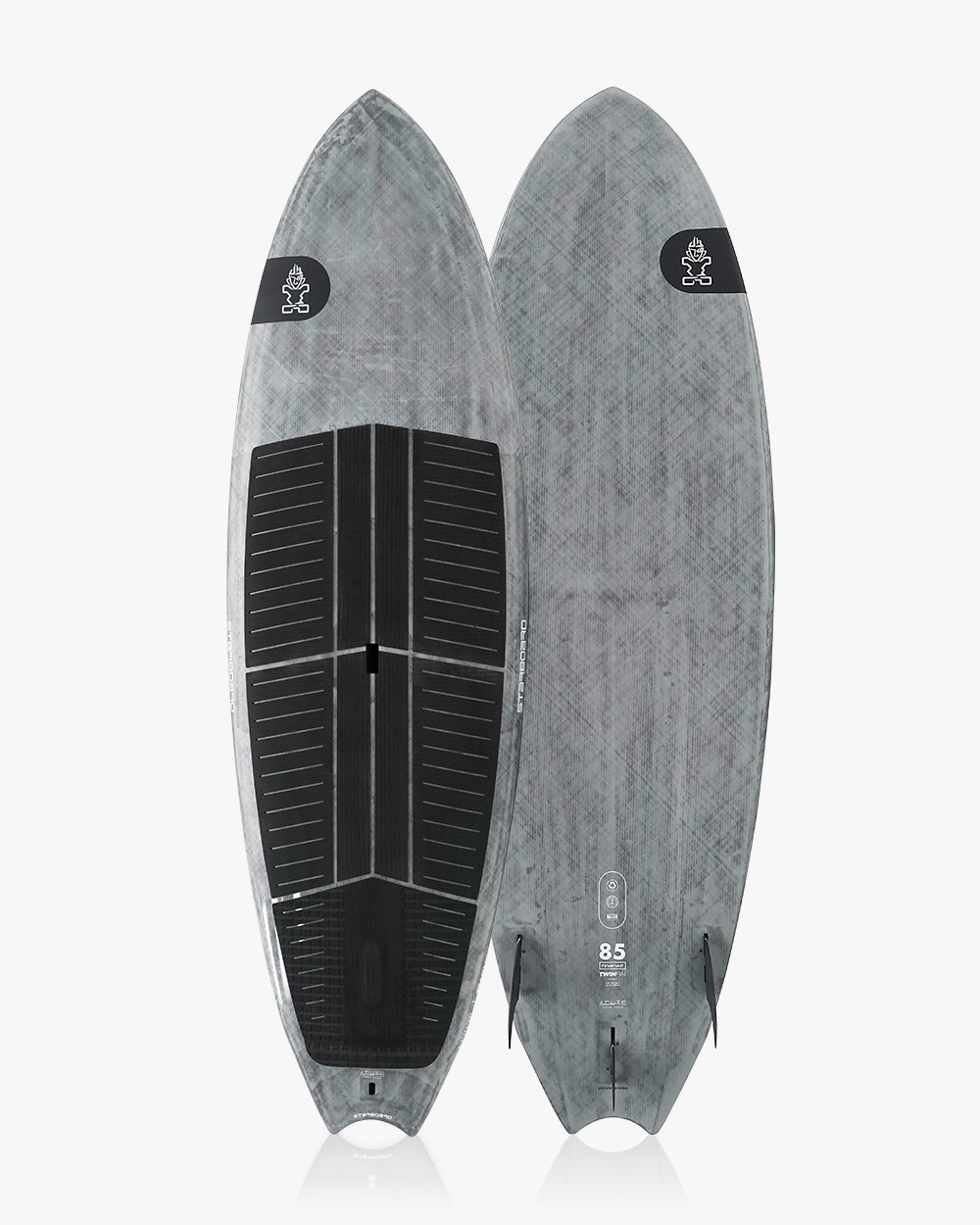
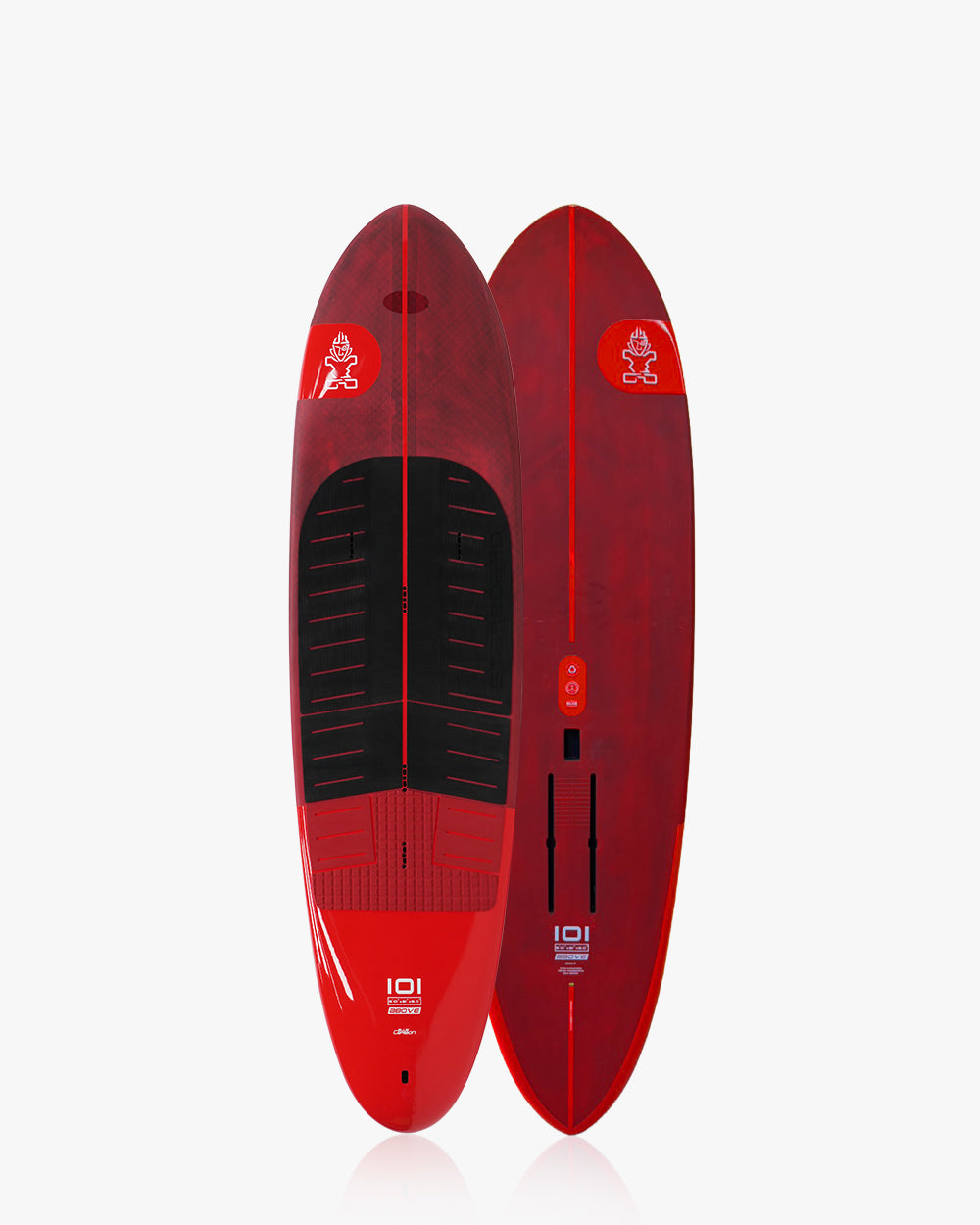
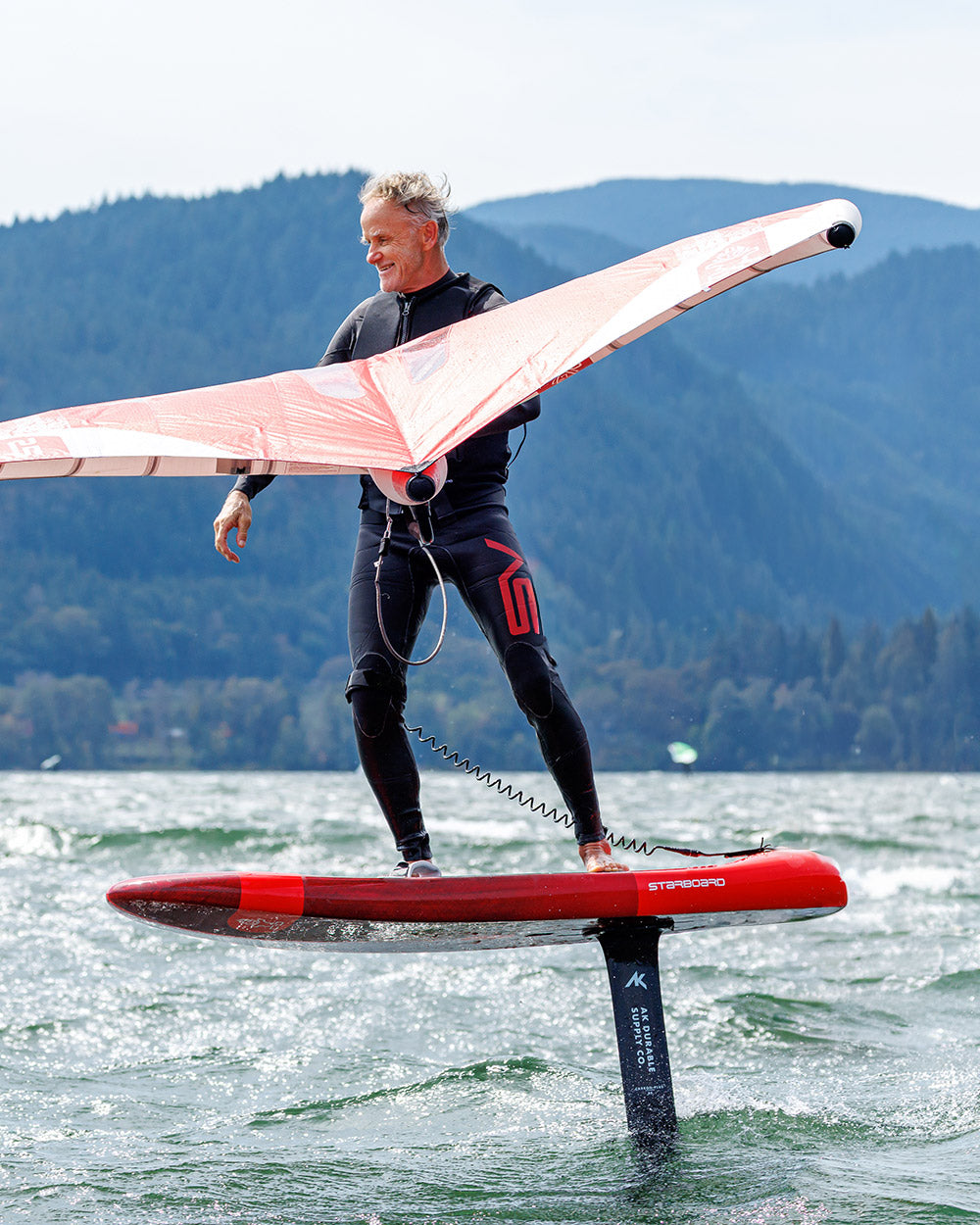
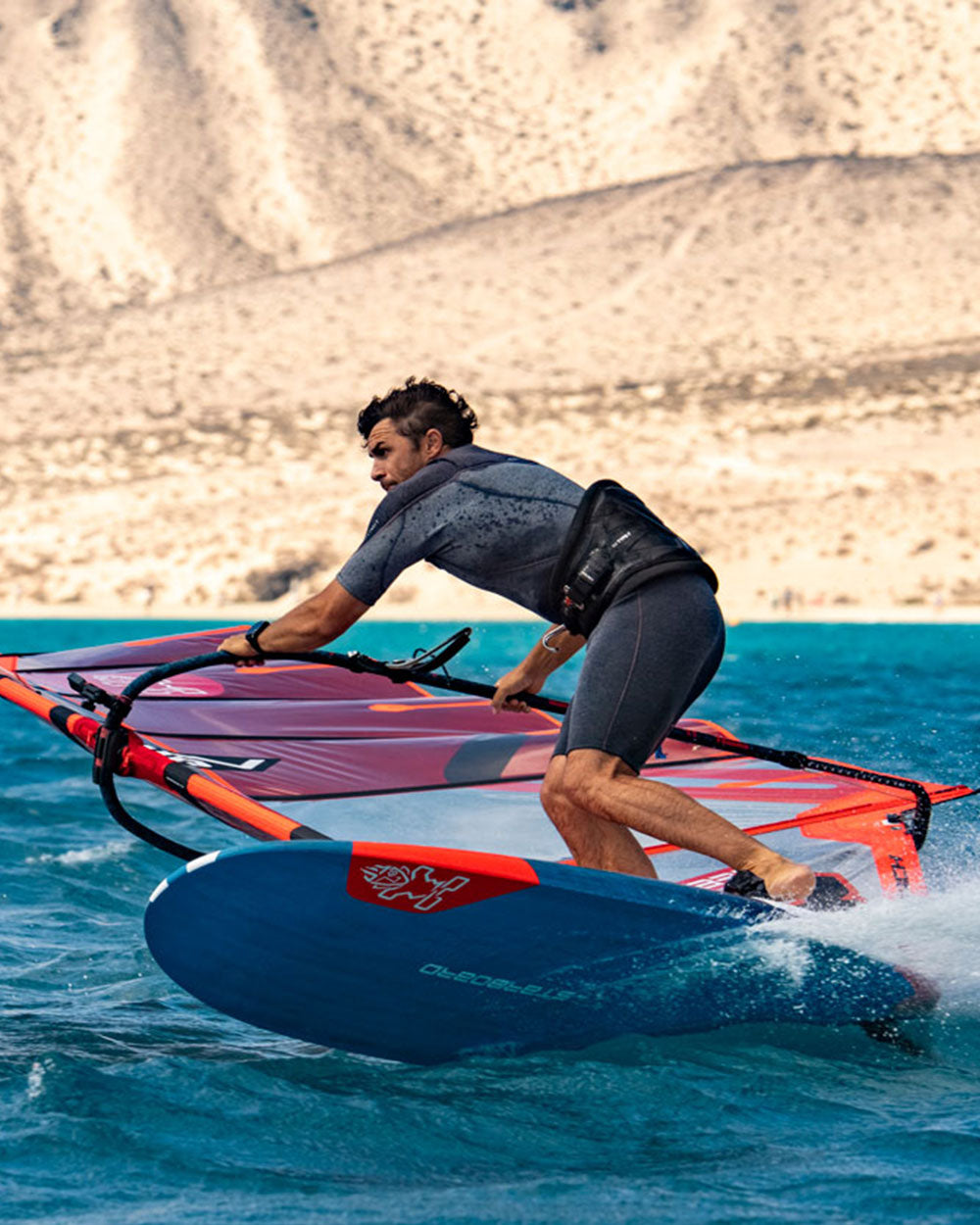
It is the board's ability to maintain its shape while sailing. Flying at high speeds over water, the board is subject to distortions in all directions: bending, twisting and compression. This distortion is greatest where you can't see while you're sailing: on the bottom of the board, in the area in front of the fin box. Shape distortions in that area reduce the efficiency of the planing surface.

Developed by Jean Louis Colmas in 1984, Wood Technology became Starboard's trademark construction since 1995. Starboard's production Wood boards then set the lead in lightweight sandwich technology, weighing in at a kilo under the competition, yet with higher impact resistance.
A sheet of 0.6 mm Australian pine wood forms the full outer shell of the board. Wood's unique properties are its natural rigidity, superior resistance to compression and higher energy absorption compared to carbon. It is the construction with the highest dynamic shape stability.

A combination of a wood spine with ultra light, flat-weave carbon. The first board construction in the World to utilize an ultra light carbon fibre that is flat-weaved for total mechanical efficiency at half the specific weight.

A lightweight, stiff and crisp construction providing the highest performance value. TechnoraTM is a special type of high tenacity Aramid fiber with remarkably high tensile strength, high toughness, and high impact-resistant qualities. TechnoraTM reinforcements together with Kevlar, Carbon and Wood laminates strengthen the skin, nose, and heel areas. All TechnoraTM boards are built with cross-linked PVC sandwich skins and a 14g/l EPS internal core

Maximum durability and value. Tufskin technology uses layers of 3-dimensional 400g glass mat wetted out with an expanding epoxy resin system that creates volume within the skin as it cures under pressure. This creates a thick, stiff, and durable sandwiched laminate. The fine plastic skin that wraps the entire board adds scratch and impact resistance (Start, Rio models). The Tufskin AST variant loses the outer plastic skin to be replaced with a half-deck wood layer to improve rigidity without a weight penalty.

The new super durable and super tough technology designed for windsurfing clubs and schools. According to testing by German SURF magazine in May 2009, Armour Tech is lighter and stronger than blow-moulded polyethylene boards like HiFly boards, and also has higher impact resistance. A new benchmark.

This friendly deck grip provides plenty of traction when wet. The traditional non skid deck grip used in windsurfing the last 20 years is great, but with the penalty of easily scratching body parts when climbing on board. Starboard now also introduces this breakthrough technology to windsurfing in the Rio Sport, Rio Armour Tech and in the Gemini.
A new era of functionality and simplicity